Surfaces That Handle Years of Daily Use
Concrete Coatings in Middlesex for driveways, walkways, and high-traffic areas showing wear and surface deterioration
Alpine Concrete Coatings applies professional coating systems to residential concrete surfaces throughout Middlesex that require protection from vehicle traffic, weather exposure, and routine wear patterns. Each coating system addresses the specific conditions and intended use of the surface, whether that's a driveway subjected to hot tire pickup, a walkway exposed to freeze-thaw cycles, or an entry area tracking in moisture and debris. The preparation process removes contaminants and opens the concrete pore structure to create mechanical adhesion that prevents delamination over time.
The coating process involves evaluating the current concrete condition, existing damage patterns, and how the surface will be used after installation. Surface preparation includes grinding or shot blasting to create the proper profile depth, repairing cracks or spalled areas, and ensuring the substrate is structurally sound before any coating material is applied. This preparation phase determines whether the coating bonds to the concrete or fails prematurely when subjected to temperature swings and load stress.
Schedule a property evaluation to assess your concrete surfaces and discuss coating options suited to your specific needs.
What Proper Surface Preparation Requires
Every coating installation begins with analyzing the concrete surface for moisture content, oil contamination, and structural integrity. The grinding or blasting process creates a surface profile measured in mils, which must match the coating manufacturer's specifications for the product being installed. Skipping this step or using inadequate equipment results in coatings that bubble, peel, or lift away from the concrete when tires turn on them or when moisture vapor tries to migrate through the slab.
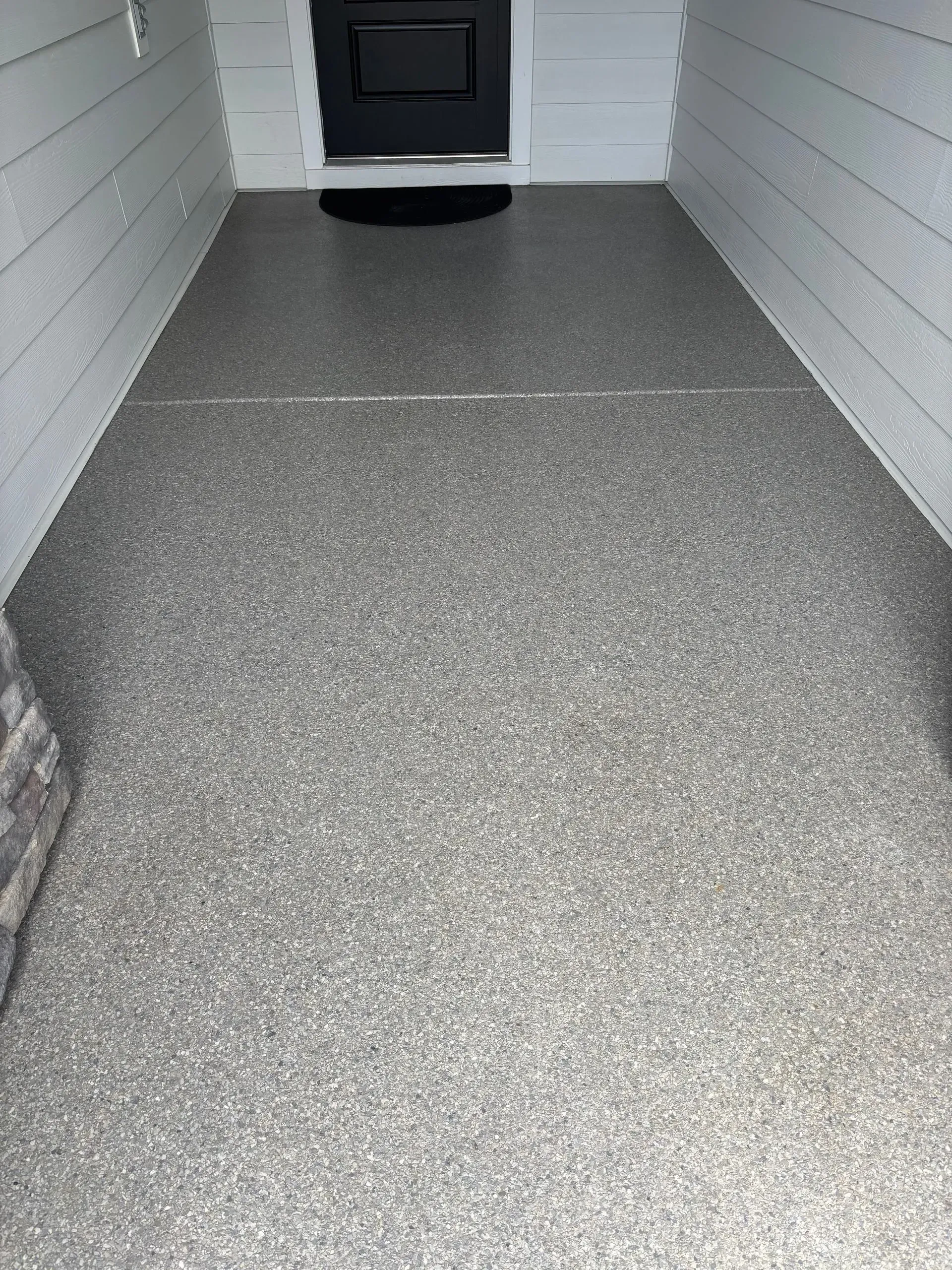
Once the coating cures and bonds to the prepared surface, you notice a visible color uniformity across the entire area and a finish texture that resists hot tire marks, oil staining, and surface etching from road salts tracked onto the concrete. The coating creates a barrier that prevents water from penetrating into the concrete and causing freeze-thaw damage during winter temperature cycles. Decorative flake or quartz broadcast options provide slip resistance and visual depth that plain concrete cannot offer.
The final topcoat layer determines the long-term performance characteristics, including UV stability, abrasion resistance, and chemical tolerance. Some homeowners prioritize a high-gloss finish for aesthetic impact, while others select a satin or matte topcoat to reduce glare and hide minor imperfections. The coating thickness, number of layers, and cure time between coats all affect how the system performs under your specific usage conditions.
What Homeowners Usually Ask
Residential coating projects in Middlesex often raise questions about preparation steps, curing times, and long-term maintenance requirements.
How long does the concrete need to cure before coating application?
New concrete must cure for at least 28 days before coating installation, allowing internal moisture levels to drop below the threshold that causes coating failure. Existing concrete requires moisture testing to verify it will not trap vapor under the coating layer.
What surface conditions prevent successful coating adhesion?
Oil stains, previous sealers, smooth trowel finishes, and high moisture vapor transmission all interfere with coating adhesion. The preparation process addresses these conditions through degreasing, mechanical removal, or moisture mitigation steps before any coating material touches the surface.
How do North Carolina temperature swings affect coating durability?
Coatings must accommodate thermal expansion and contraction as concrete heats up in summer sun and cools during winter nights. Properly formulated systems flex with these movements rather than cracking or debonding at the stress points.
What maintenance does a coated surface require?
Routine sweeping to remove abrasive grit and occasional washing with mild detergent keeps the coating clean without degrading the topcoat. Avoid using metal shovels or harsh chemicals that can scratch or dull the finish over time.
When should decorative flake be added to the coating system?
Flake broadcast happens while the base coat remains wet, allowing the chips to embed into the coating before the topcoat seals everything in place. The flake density and color selection changes the final appearance and texture of the surface.
Alpine Concrete Coatings tailors every coating system to match the surface conditions, usage patterns, and aesthetic preferences specific to your property. Request a free estimate to review coating options and discuss preparation requirements for your concrete surfaces.